
Arguments allow your scripts to receive user input at runtime. Scripts can accept up to 3 arguments.
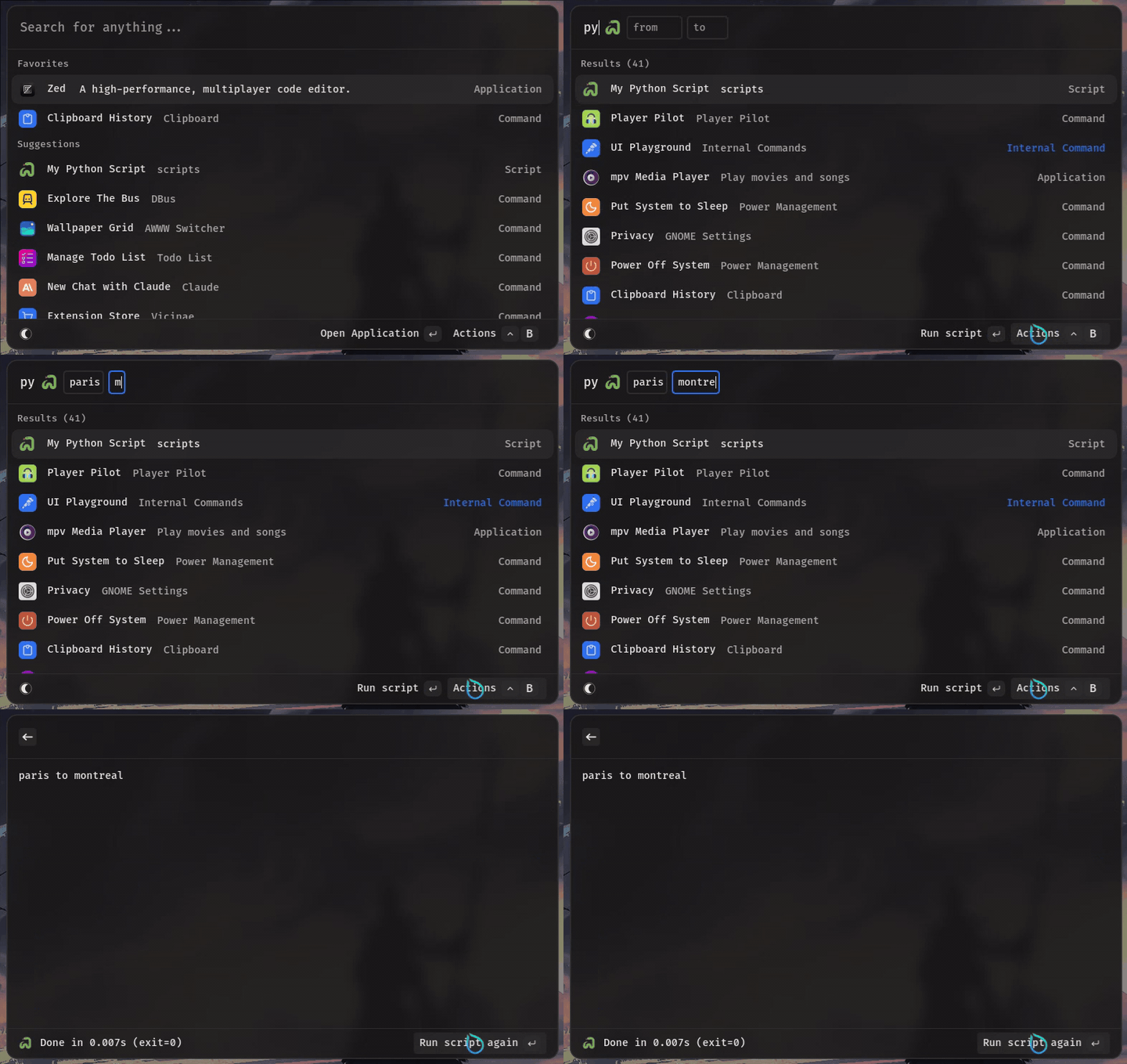
Arguments
Arguments are specified using the @vicinae.argument1, @vicinae.argument2, and @vicinae.argument3 directives. Each argument is defined as a JSON object with various configuration options.
Like any other directive, the JSON describing the argument needs to be on one single line.
Example
Here's a script that accepts two text arguments:
#!/usr/bin/env python3
# @vicinae.schemaVersion 1
# @vicinae.title My Python Script
# @vicinae.icon 🐍
# @vicinae.mode fullOutput
# @vicinae.argument1 { "type": "text", "placeholder": "from" }
# @vicinae.argument2 { "type": "text", "placeholder": "to", "optional": true }

import sys

source = sys.argv[1]
destination = sys.argv[2] if len(sys.argv) > 2 else None

print(source + " to " + destination)
Argument Configuration
| Field | Description | Required |
|---|---|---|
type | The argument type. Supported values: "text", "password" (redacted text). | Yes |
placeholder | Placeholder text for the input field. | Yes |
optional | Set to true if you want to mark the argument as optional. The argument is considered required by default - vicinae will not allow executing the script if the argument is empty. | No |
percentEncoded | URL encodes the text provided as an argument if set to true. | No |